
Rising Star Awards
Overview
The Rising Star Awards recognize faculty for their commitment to ongoing educational improvements and excellence. Rising Star faculty participate in professional development of teaching activities through the Center for Teaching Excellence.
Faculty can become eligible for a 2027 Rising Star Award by completing the requirements before the nomination deadline in 2027. All Rising Star Award requirements in Professional Development, Focused Training, and Pay It Forward must be completed within the past two years, and each eligibility requirement can only be applied to one qualifying award. For example, if you win the 2019 Rising Star Award by submitting the Great Teaching Certificate, you cannot use the Great Teaching Certificate for a future application.
Faculty are eligible to receive the award once within a two-year span.
Eligibility
1. Professional Development
- Complete at least one Passport to Great Teaching certificate
2. Focused Training
Participate in at least two of the following:
*Must submit proof of completion (certificate, badge, etc.)
- Elevate
- Teaching Excellence Academy
- Global Learning Institute
- Design a Virtual Exchange
- CITT Course Mapping Camp
- CITT Best Practices for Teaching Online
- The Great Online Course Series
- Faculty Learning Community (Receive an FLC participation form after the second semester)
- CALS Teacher College
- CTSI Mentor Academy
- The AI Adventure (must complete all 3 courses)
- Complete the Critical Teaching Behaviors Reading Group
- Pathways to Excellence
3. Pay it Forward
Select two of the following:
- Present a workshop for the Center for Teaching Excellence in Fall and Spring, including
- Teaching Sparks
- Café Conversation
- Be an invited speaker at an FLC
- Contribute to the resource library
- Share your published SoTL or RiTL article
- Present at Interface
- Record a podcast with the Center for Teaching Excellence
- Lead a Faculty Learning Community as a facilitator
- Assess and provide feedback on CTE initiatives
- Develop an OER for your course or adapt content to make your course affordable
- Complete a peer observation training and complete two peer observations (FARPET)
- Serve on a CTE Committee
- Peer reviewer for Interface journal
4. Continuous Improvement
Select two of the following:
- Peer observation within the last three academic years
- Can be CTE peer observation (FARPET), or a UFQ Online Course Review, or it can be any other peer review using an evidence -based instrument
- Observation must have an accompanying reflection
- Letter of support from department leadership, chair or higher
- Student evaluations from the last three to five semesters
Application Window
The nomination application for the 2026-27 awards cycle will go live on October 1, 2026. The nominations for all awards will close on January 19, 2027.
For questions about the requirements or award, contact Lupita Eyde-Tucker
Emily K. Bald, PhD, College of Liberal Arts and Sciences
Oliver Grundmann, PhD, College of Pharmacy
Kristen V. Hardy, J.D., College of Law
Larisa Olesova, PhD, College of Education
Daphne Schmid, Ph.D., College of Health and Human Performances
Dr. Heather Young, Department of Agricultural Education and Communication
Katherine Sims, PhD, Department of Family, Youth, and Community Sciences
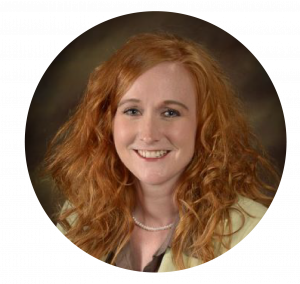 Tiff Jenson, Ph.D., MSW
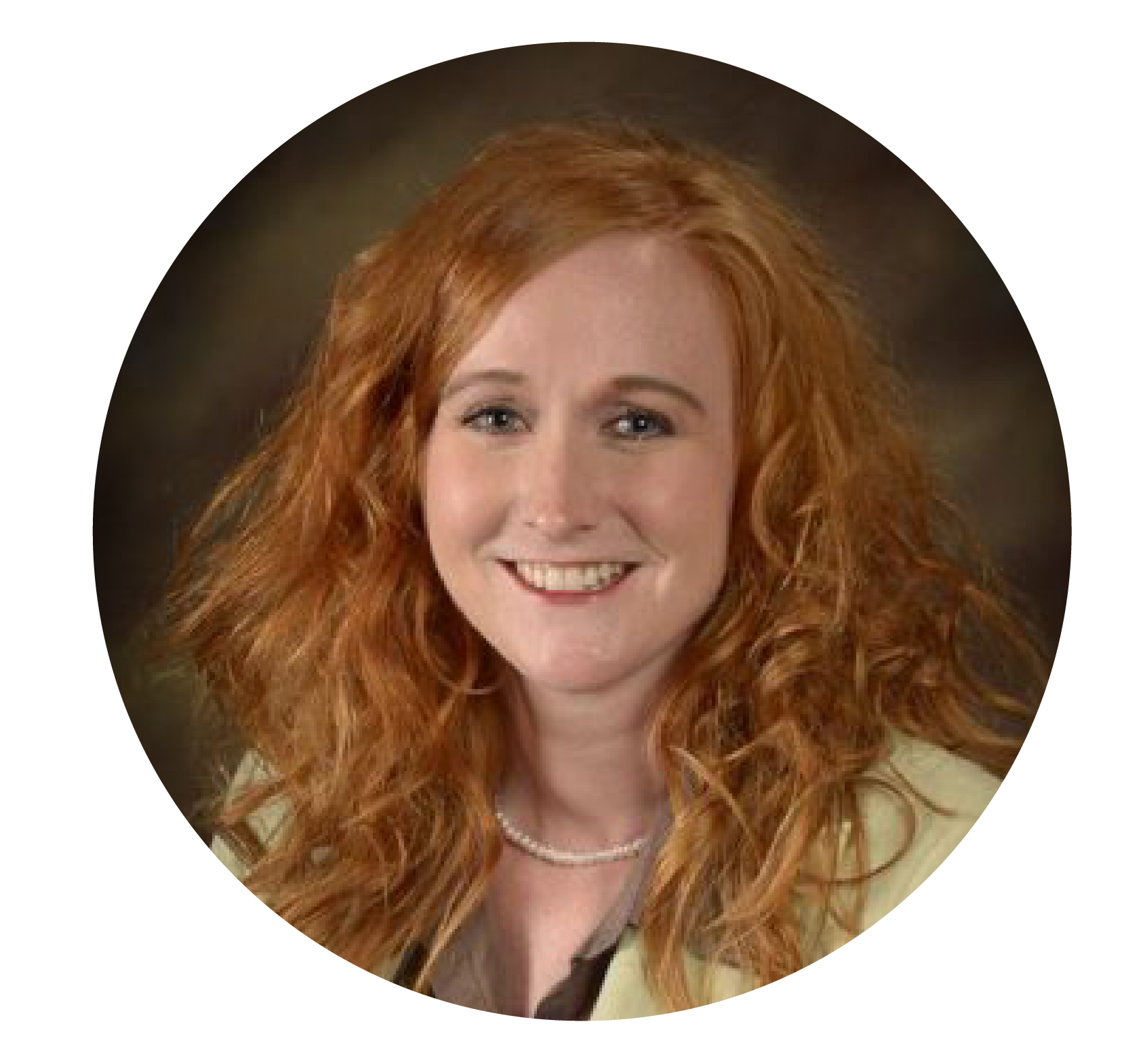
Dr. Tiff Jenson is an Associate Instructional Professor in the Department of Sociology and Criminology & Law at the College of Liberal Arts and Sciences at the University of Florida (UF), primarily contributing to the UF Online program. Dr. Jenson completed a B.S. degree in Sociology and an M.L.A. degree in Social Sciences from Southern Methodist University, an M.S.W. from the University of Louisville, and a Ph.D. in Sociology from the University of Oklahoma, specializing in criminology. Having worked in higher education since 2001, she currently teaches upper-division courses on criminology, terrorism, research methods, and statistical analysis.
 Ana Maria Porras, Ph.D.

Dr. Ana Maria Porras is an Assistant Professor of Biomedical Engineering at the University of Florida, where she leads the Tissue-Microbe Interactions lab. She teaches undergraduate and graduate engineering courses. Her teaching is grounded in student-centered practices that help students develop technical know-how and grow their multicultural, teamwork, and critical thinking skills. With her passion for internationalization, Dr. Porras was a 2022 UF Global Fellow and has implemented two virtual exchanges in her classroom. She is also the co-founder of the Latinx in Biomedical Engineering community, a science artist, and an advocate for inclusive multilingual science communication.
 Catia Silva, Ph.D.
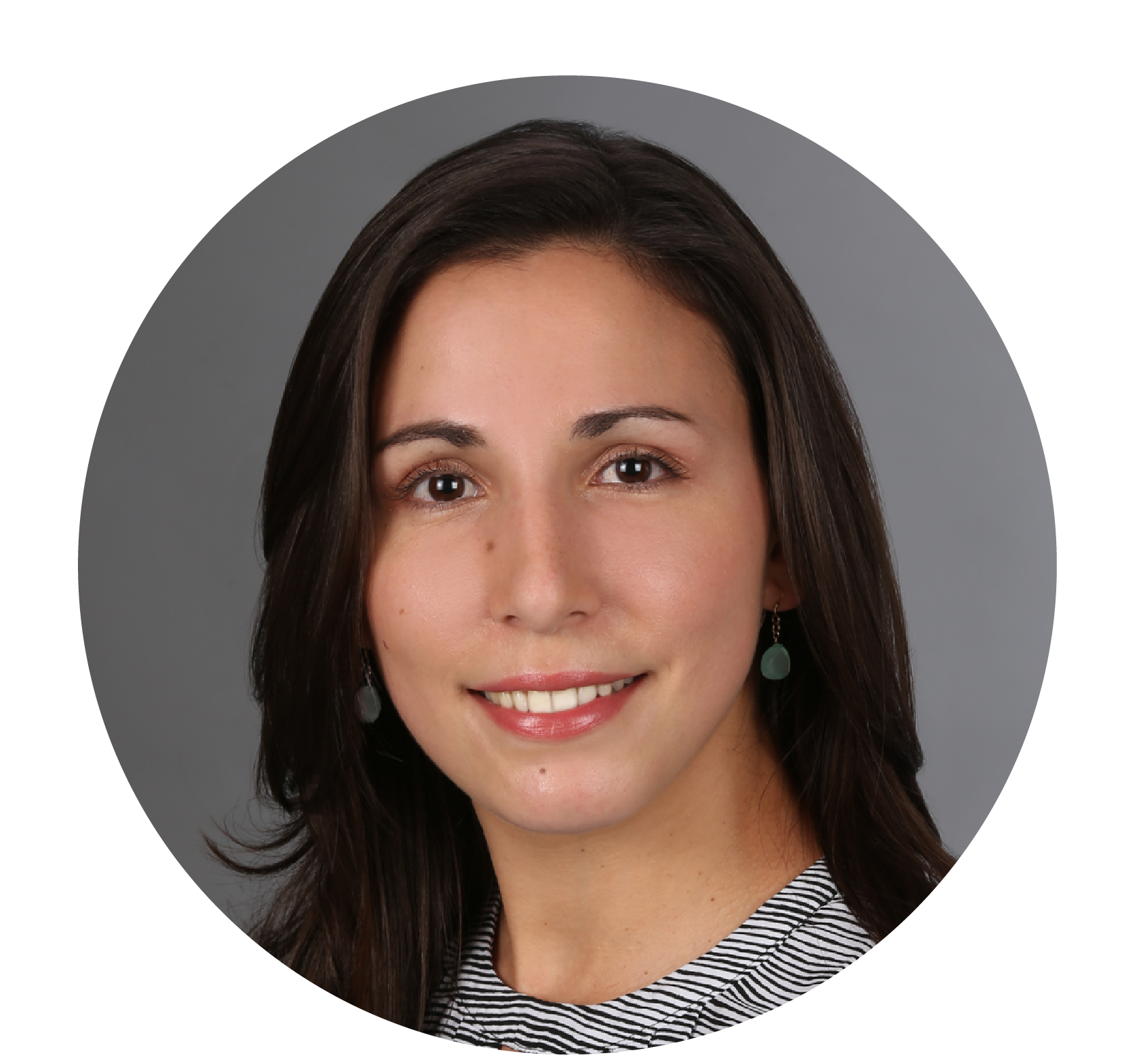
Dr. Catia S. Silva is an Instructional Assistant Professor in the ECE department at the University of Florida. She specializes in machine learning, AI, data analytics, personalized learning, and experiential learning. Dr. Silva teaches courses in data science and AI, supporting UF’s goal to integrate AI across its curriculum. She serves as Program Coordinator for the MS in Applied Data Science and MS in AI Systems. As a UF GitHub Campus Advisor, she co-developed training to help faculty across campus integrate Git and GitHub. Dr. Silva has received multiple teaching excellence awards, recognizing her impact on students.
Cliff Haynes, Ph.D. | Clinical Associate Professor and Graduate Coordinator | School of Human Development and Organizational Studies in Education | College of Education
Dr. Cliff Haynes is a Clinical Associate Professor in Student Personnel in Higher Education. He teaches courses related to historical and contemporary issues in student affairs administration and the use of qualitative research methods in higher education administration research. While he occasionally teaches face-to-face courses, Cliff specializes in teaching online in both synchronous and asynchronous modalities. Cliff has completed many of the certificates offered by the Center for Teaching Excellence and the Center for Instructional Technology & Training, which have provided him the opportunity to learn and utilize different pedagogical approaches to engage students. He is currently focusing on research within the realm of the Scholarship of Teaching and Learning (SoTL) in student affairs graduate preparation programs.
Luis Mejia-Puig, Ph.D. | Assistant Professor | Department of Interior Design
I hold the position of Assistant Professor in Interior Design at UF’s College of Design, Construction, and Planning, drawing on over 15 years of experience in design education. My expertise lies in digital and emerging technologies, driving my research towards the creation of instructional materials and pedagogical strategies to elevate design education. Despite my relatively brief research career, I have successfully published in esteemed journals such as the Journal of Interior Design, the Journal of Educational Technology Systems, and the International Journal of Technology and Design Education. Actively participating in conferences organized by the Interior Design Educators Council (IDEC) and Environmental Design Research Association (EDRA), I contribute regularly to the academic discourse in my field. At UF, I lead the dc(square) Lab, a hub for research and teaching in Digital Design, Creativity, and Cognition. Equipped with cutting-edge virtual reality devices and physiological instruments like skin conductivity monitors, heart rate monitors, and functional near-infrared spectroscopy, the lab is at the forefront of innovative exploration.
Active learning serves as the cornerstone of my teaching philosophy. To me, active learning entails the educator facilitating the learning journey through reflection and analysis, while students actively participate in this process with responsibility. I advocate for incorporating pre-class, in-class, and post-class requirements to effectively engage students. It is imperative for instructors to employ innovative and diverse strategies that resonate with students’ interests and leave a lasting impact on their learning experiences. Given the tech-savvy nature of today’s learners, leveraging technology for collaborative tasks has yielded promising outcomes. Additionally, gamification emerges as an effective approach to capture students’ attention and sustain their engagement throughout the learning process.
Dr. Amy Parziale | Instructional Assistant Professor
Dr. Parziale teaches professional writing and communication in the Management Communication Center. Her 15+ years of experience has ranged from teaching writing and humanities at Rollins College and Tulane University to working in nonprofit administration and business ethics education. Her scholarship reflects this diversity of interests. Dr. Parziale enjoys connecting with her students to find passions they can bring to their writing and presentations.
Erika Brooke, Ph.D
Associate Instructional Professor
Department of Sociology and Criminology & Law
Dr. Erika Brooke is an Associate Instructional Professor in the Department of Sociology and Criminology & Law. Erika teaches a variety of undergraduate courses in Criminology. She focuses on incorporating experiential learning opportunities and universal design for learning components within her courses that give students hands-on experience exploring the criminal justice system.
Ryan Z. Good, Ph.D
Instructional Assistant Professor
School of Natural Resources and Environment
College of Agricultural and Life Sciences
Dr. Ryan Z. Good is an Instructional Assistant Professor in the School of Natural Resources and Environment. Dr. Good’s experience in both environmental and economic research is complemented by robust geospatial expertise, allowing him to infuse his teaching with a variety of data sources to address complex, cross-scalar questions about the relationships between human activity and environmental change. His courses have a distinct international focus, and as co-leader of the Sustainable Development Goals in the Classroom Faculty Learning Community, he works to help the broader UF faculty build international content in classrooms across campus. Dr. Good teaches a variety of courses in environmental science and serves as lead instructor for the SNRE’s introductory general education course.
Megan Mocko
Lecturer
Information Systems and Office Management
Warrington College of Business
Megan Mocko is a lecturer at the Warrington College of Business. She teaches statistics to undergraduate and graduate students. Before that, she rose through the ranks from lecturer to senior lecturer and master lecturer in the Department of Statistics in the College of Liberal Arts and Sciences also at UF. Megan has taught statistics in multiple formats: face-to-face, hybrid, and completely online. In addition to her teaching, Megan’s involvement in statistics education led to her work as co-chair on the 2016 GAISE (Guidelines for Assessment and Instruction in Statistics Education) report. The American Statistical Association endorsed the revised 2016 GAISE report. Megan was also program chair for the eCOTS (electronic Conference on Teaching Statistics) in 2022 and 2020. In the Fall of 2022, she began her doctorial journey in the Ed.D. program for Curriculum and Instruction with an emphasis in Educational Technology at the UF College of Education. She is interested in engaging everyone in the classroom using educational technology, learning analytics, and using virtual exchange to promote communication about data across international boundaries.
Harrison Hove
Lecturer and Associate Chair
Department of Journalism
College of Journalism and Communications
Harrison Hove is a Lecturer and Associate Chair in Journalism at the University of Florida. He was named the 2020-2021 University of Florida Undergraduate Teacher of the Year. He teaches courses focused on broadcast journalism. Harrison also produces special projects with student journalists for WUFT-TV. Since 2018, his students have earned national recognition from Hearst Journalism Awards, RTDNA, BEA, SPJ, and NBS. Before arriving at UF, Hove spent more than a decade in local television news serving in roles as news anchor, reporter, and meteorologist. Hove has earned 7 regional Emmys and 21 nominations for his work.
Lauren Weisberg
Doctoral Student
School of Teaching and Learning
College of Education
Lauren Weisberg teaches educational technology courses for preservice teachers. She restructured the curriculum to promote digital equity by modeling transformative technology integration instructional practices grounded in theory. Lauren engages her students in hands-on exploration and artifact creation with various digital tools, and prioritizes collaboration, choice, and inquiry. Through teaching and research, Lauren is dedicated to preparing the next generation of teachers to enter the field with equity mindsets, motivation to disrupt the status quo, and a commitment towards meaningful change.
Rachel Yoho, CDP, Ph.D
MHS Program Director; Diversity, Equity, and Inclusion Chair for PHHP; Clinical Assistant Professor
Department of Environmental & Global Health
College of Public Health and Health Professions
Dr. Rachel Yoho is an educational program director, the diversity, equity, and inclusion (DEI) chair for PHHP, and an instructional faculty member. She has specific interests in DEI in education and the workplace, climate change, and communication. She is honored to receive this award acknowledging her dedication to innovative educational practices and to recognize her efforts to develop and launch an experiential DEI education program for UF employees.
Brantlee Spakes-Richter, Ph.D.
Assistant Professor
Department of Plant Pathology
College of Agricultural and Life Sciences
Diba Mani, Ph.D.
Lecturer
Department of Applied Physiology & Kinesiology
College of Health & Human Performance
Erika Brooke, Ph.D.
Lecturer
Department of Sociology and Criminology & Law
College of Liberal Arts and Sciences
Harrison Hove
Lecturer
Department of Journalism
College of Journalism and Communications
Harrison Hove teaches broadcast journalism courses where his students practice knowledge at the highest level of Bloom’s Taxonomy: creating. Harrison oversees student content creation from timed writings to daily television reporting and special projects. Working to build classroom community virtually, Harrison has restructured an online broadcast writing course with themes of interactivity and active learning. He also successfully internationalized the curriculum in his TV news reporting course, encouraging students to highlight stories in marginalized and internationalized communities.
Megan Mocko
Lecturer
Department of Information Systems and Operations Management
Warrington College of Business
Megan Mocko is a lecturer at Warrington College of Business. She teaches statistics to undergraduate and graduate students in the college. She is interested in engaging everyone in the classroom. Previously, she taught statistics in the Department of Statistics. In addition to her teaching, Megan’s involvement in statistics education led to her work as co-chair on the recently updated 2016 GAISE Guidelines report. The American Statistical Association endorsed the revised 2016 GAISE report along with the original report released in 2005.
Mengyu (May) Li, Ph.D.
Lecturer
Department of Industrial & Systems Engineering
College of Engineering
Dr. Mengyu Li teaches numerous undergraduate and graduate ISE courses that are related to supply chain management/modeling and systems architecture/design. She enjoys advancing her teaching skills by implementing novel teaching methods in her courses to improve the learning experiences for students. Mengyu takes every opportunity available to learn about how to utilize technology in her courses to address the needs of diverse learners, for both face-to-face and online teaching. She also challenges students with activities that require group efforts and communication to enhance the sense of learning community.
Misti Sharp, Ph.D
Lecturer
Food and Resource Economics Department
Institute of Food and Agricultural Sciences
Misti Sharp joined the Food and Resource Economics Department at the University of Florida in fall of 2016 as a lecturer with a 100% teaching appointment. She teaches economically and quantitatively focused courses and has had the opportunity to teach students in Germany, in the US, online, and in a hybrid flexible format. She believes that the best learning is achieved when students can engage with the material in a variety of ways. This has led her to develop classroom experiments for students to experience economic theories firsthand and develop application projects using real-world data for applied data analysis. Previous students describe her classes as challenging but rewarding due to the emphasis on critical thinking and application.
Rachel Slivon, Ph.D
Lecturer
Management Communication Center
Warrington College of Business
Rachel Yoho, Ph.D
Clinical Assistant Professor
Department of Environmental & Global Health
College of Public Health and Health Professions
Dr. Rachel Yoho teaches environmental health and global public health courses. She developed and teaches a new course, “Climate Change, the Environment, and the Future of Public Health.” Dr. Yoho is strongly committed to helping students develop their communication skills, particularly to align their communication strategies with the target audience, whether technical or non-technical. She is also invested in diversity, equity, and inclusion research and engagement in the classroom and the workplace.
Samuel Martins, Ph.D
Assistant Professor
Department of Plant Pathology
College of Agricultural and Life Sciences
Dr. Samuel Martins is an Assistant Professor in the Department of Plant Pathology. Martins emulates the Japanese philosophy “Kai Zen,” which means “continuous improvement,”. He supports an open classroom environment, where students are encouraged to ask questions and make mistakes. He enjoys using different active learning approaches, such as the jigsaw technique, think-pair-share, online real-time polls, as well as collaborative projects, which allow students to learn also from each other. He plans to incorporate virtual exchange into his class with people from different countries as a way to increase students’ intercultural skills in a global perspective.
Amber Emanuel, Ph.D.
Lecturer
Department of Health Education & Behavior
College of Health & Human Performance
Crystal Marull, Ph.D.
Lecturer
Spanish & Portuguese Studies
College of Liberal Arts and Sciences
Dr. Crystal Marull became the Coordinator of the Online Spanish Program in 2017. She adopts an innovative approach that incorporates telecollaborative virtual exchanges to facilitate student conversations with native speakers located across the Spanish-speaking world. These personal exchanges are crucial to engaging traditional and non-traditional learners by providing them with a safe space to navigate the process of discovery and to find meaning for their learning. Her courses have received local and national recognition. She is actively engaged with the CTE as she strives to continue her own process of discovery and pedagogical development.
Diba Mani, Ph.D.
Lecturer
Department of Applied Physiology & Kinesiology
College of Health & Human Performance
Erika Brooke, Ph.D.
Lecturer
Department of Sociology and Criminology & Law
College of Health & Human Performance
Dr. Erika Brooke is a lecturer in the Department of Sociology and Criminology & Law. Erika focuses on integrating experiential learning opportunities and career readiness components into each one of her classes to give her students hands-on experience with the justice system. She plans to incorporate a virtual exchange project into the class as a way for students to further hone their intercultural competence and communication skills. Over the course of the semester, her students will collaborate with students in Columbia on a variety of interactive assessments that tap into issues related to the justice system.
Frederick Kates, Ph.D., MBA
Clinical Assistant Professor
Health Services Research, Management & Policy
College of Public Health and Health Professions
Dr. Kates serves as a Clinical Assistant Professor for Health Services Research, Management & Policy Department in the College of Public Health and Health Professions. Rick is a dedicated educator who strives to make a difference in the lives of the students he teaches. He created a new course called Health Informatics & Emerging Healthcare Technologies, which is open to students outside his college to promote interdisciplinary collaboration and entrepreneurship. He is currently working on a national certification component where students have an opportunity to take the Healthcare Information and Management Systems Society certification. This opportunity would help students to be more employable in the job market as well as promote UF as a forerunner in developing future healthcare leaders.
Ginny Greenway, Ph.D.
Postdoctoral Researcher
Entomology & Nematology Department
Institute of Food and Agricultural Sciences
Dr. Ginny Greenway focuses on fusing research with teaching via Course-based Undergraduate Research Experiences. In these courses, students gain authentic research experience and she prioritizes an active learning and team-based approach to encourage engagement and investment in the scientific process. She also aims to include global perspectives through virtual exchange activities with international researchers to offer students a broader perspective on what it means to be a scientist. Alongside this, Ginny has been coordinating the roll-out of CUREs across campus with the Center for Undergraduate Research
John Mendoza-Garcia, Ph.D.
Lecturer
Department of Engineering Education
College of Engineering
Carolyn Hanson, Ph.D.
Clinical Assistant Professor
Department of Occupational Therapy
College of Public Health and Health Professions
Diba Mani, Ph.D.
Lecturer
Department of Applied Physiology & Kinesiology
College of Health & Human Performance
Dr. Diba Mani is a lecturer in the department of Applied Physiology & Kinesiology. Diba has taught classes ranging in size. She values implementing analogies and student engagement to hone in on concepts discussed in lecture material. Diba’s course design puts emphasis on recognizing the importance of translating the topics discussed in class to “real life” (#IRL), be it by applying concepts to career and future educational interests, physical activity (sport) engagement, or healthcare experiences. Diba prioritizes the expansion of student interaction through active learning, having students read, evaluate, discuss, and present scientific articles to their peers, improving their own professional development concurrent to applying course lecture content. Diba also emphasizes the use of analogies to cater to different learning styles and background knowledge students may come into her class with.
Ferol Carytsas
Lecturer
Center for Arts in Medicine
College of the Arts
Ferol joined the faculty of the Center for Arts in Medicine in August 2018. She is a lecturer and the Undergraduate Advisor with the UF Center for Arts in Medicine. Her passion for education stems from her own teachers and her belief that effective teaching is about taking the time to build relationships and establishing an environment where students feel valued and appreciated. Ferol began teaching the undergraduate course, Music and Health, in Fall 2017. Music and Health was runner-up winner for the UFIT Exceptional Course Development award, and the course received one of the UF International Center’s Internationalizing the Curriculum grants.
Roxane Coche, Ph.D.
Assistant Professor
Sports Media and Communication
College of Journalism and Communications
Dr. Roxane Coche was an assistant professor in the Department of Journalism and Strategic Media at the University of Memphis, teaching undergraduate and graduate students in broadcast, sports journalism and entrepreneurial media before coming to UF in 2018. She has developed a variety of exercises and activities to help students understand (and acquire) the many skills necessary to make it in today’s media world. Next semester, she will develop a standard-based grading rubric because it creates an environment that is much closer to the professional industry. Roxane and her colleague Eric Esterline won a $6,000 Internationalizing the Curriculum grant to develop the course, which will be offered for the first time in Spring 2020. The course will include a virtual exchange component, which means that students will collaborate with foreign students during a five-week module.
Sujata Krishna, Ph.D.
Lecturer
Department of Physics
College of Liberal Arts & Sciences
Dr. Sujata Krishna joined the University of Florida in Fall 2018 and enjoys interacting with students inside and outside class. She has had the opportunity to teach a variety of classes such as large courses in a traditional auditorium, smaller classes, online lecture and lab courses. Sujata likes to engage students in classroom conversations and encourages students to participate, even when they might only have an educated guess. Student participation keeps the learning active and brings to light any misconceptions. She keeps her course content exciting and current by including hot-off-the-press physics in a simplified way.